
Scrumacademy . 27th Jan, 2026, 9:14 AM
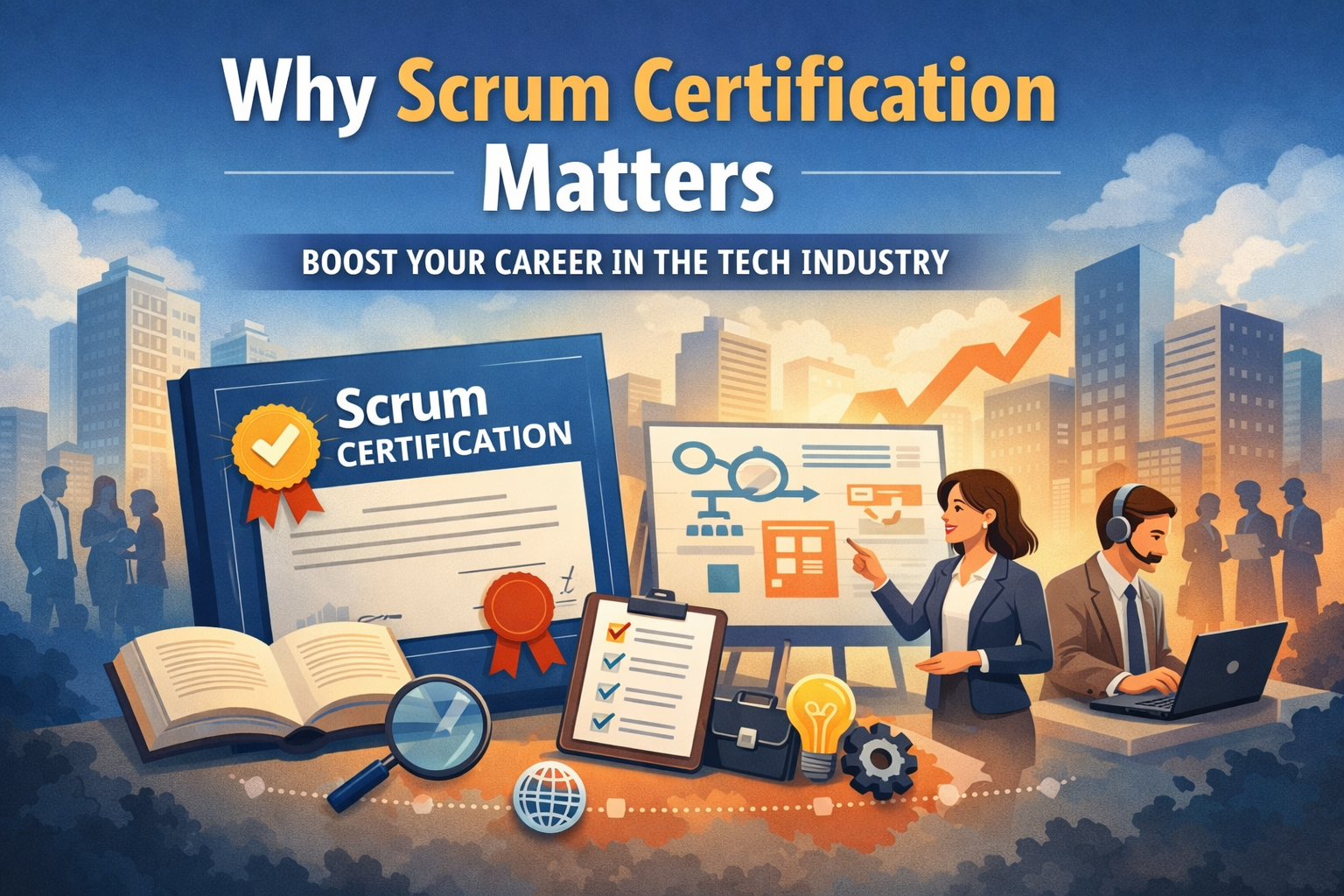
In a fast-moving and highly competitive tech industry, knowing Scrum is no longer enough. Being able to prove it with a recognized Scrum certification has become a key differentiator for professionals and teams.
Scrum is one of the most widely adopted agile frameworks in the world. Companies use it to improve collaboration, increase transparency, and deliver value faster. However, many professionals claim to “know Scrum” without truly understanding its principles, roles, and ceremonies. A Scrum certification validates that your knowledge is structured, aligned with best practices, and based on real agile foundations.
One of the biggest benefits of a Scrum certification is that it creates a common language. Certified professionals understand the same concepts, terminology, and responsibilities. This alignment reduces misunderstandings, improves communication, and helps teams work more efficiently from day one—especially in distributed or cross-functional teams.
A Scrum certification signals credibility. It shows employers, clients, and stakeholders that you have invested time and effort into mastering agile principles. It also demonstrates commitment to continuous learning—an essential mindset in technology and product development.
In leadership roles such as Scrum Master, Product Owner, or Tech Lead, this credibility is critical. Teams are more likely to trust and follow someone who has been formally trained and certified.
Scrum is often misunderstood as a set of meetings or rigid rules. A proper certification goes deeper, helping professionals understand why Scrum works, not just how it looks on paper. This deeper understanding leads to better decision-making, healthier teams, and the ability to adapt Scrum to real-world scenarios without breaking its core principles.
From a career perspective, Scrum certifications open doors. Many companies explicitly list them as requirements or strong pluses in job descriptions. They can accelerate promotions, enable role changes, and unlock opportunities in international and remote-first companies.
In a market where technical skills are increasingly similar, certifications help professionals stand out.
Finally, Scrum certifications are often the first step toward broader agile and leadership roles. They provide a solid foundation for scaling frameworks, product strategy, and organizational transformation. Even for developers and designers, understanding Scrum deeply improves collaboration with business and leadership teams.
In a world where change is constant, Scrum knowledge—validated and well-applied—makes a real difference.
Take the next step in your agile career.
Prepare your Scrum certification with focused courses built to help you truly understand Scrum—and pass the exam on your first attempt.
👉 https://scrumdemy.com/courses
