
Scrumacademy . 28th Jan, 2026, 6:26 PM
Scrum has become one of the most searched and implemented agile frameworks in the tech industry—and for good reason. From startups to large enterprises, organizations rely on Scrum to build better products, faster and with more transparency.
But what exactly is Scrum, and why is it so important to master it properly?
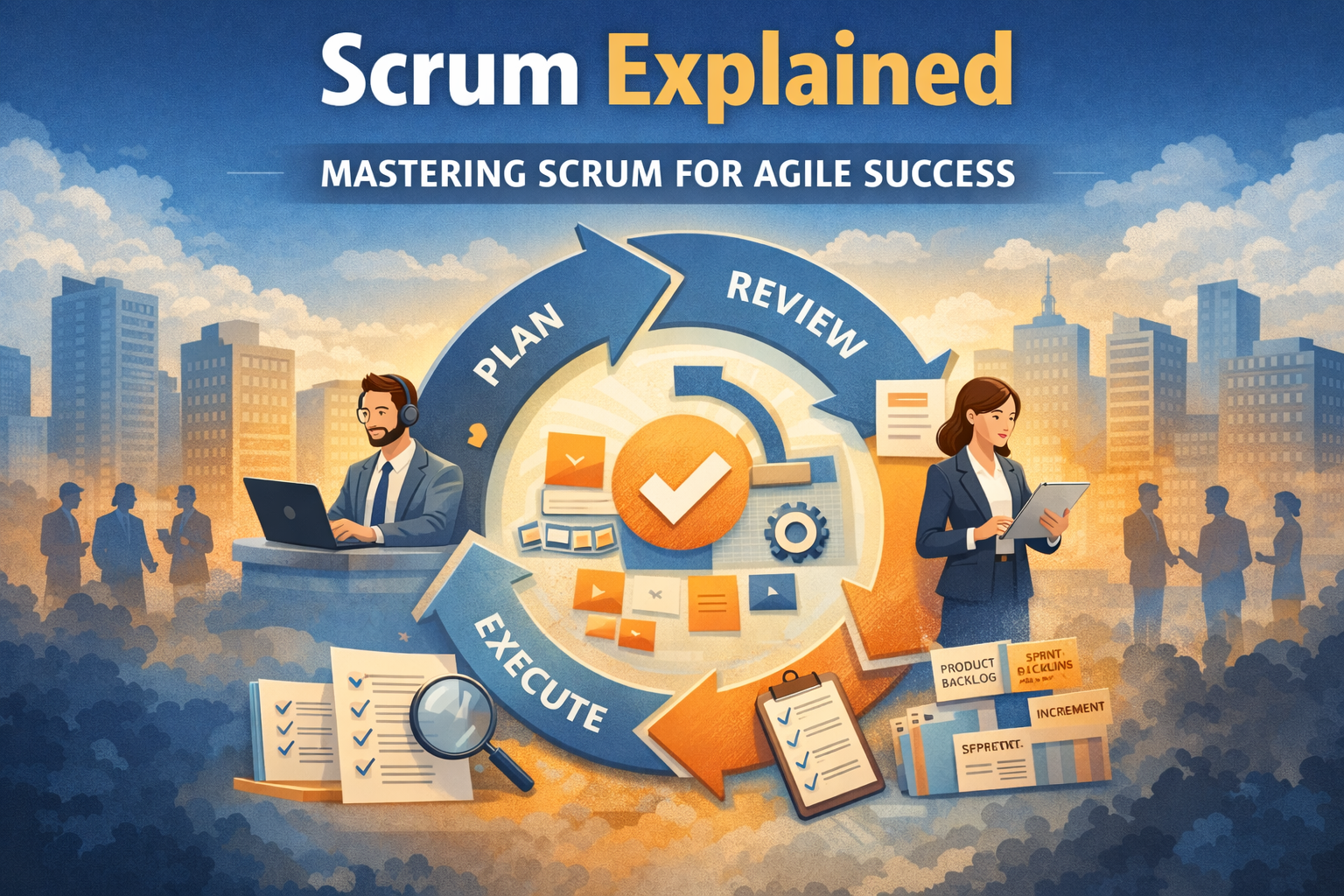
Scrum is an agile framework designed to help teams deliver value incrementally through collaboration, continuous feedback, and short development cycles called sprints. It is based on three pillars: transparency, inspection, and adaptation.
Scrum defines clear roles (Scrum Master, Product Owner, Development Team), events (Sprint Planning, Daily Scrum, Sprint Review, Retrospective), and artifacts (Product Backlog, Sprint Backlog, Increment). Together, they create a lightweight but powerful structure that helps teams stay aligned and focused on delivering real value.
From an industry perspective, Scrum solves several critical problems:
It reduces delivery risk by breaking work into small, manageable increments
It improves communication between technical and business teams
It allows faster response to market changes
It increases accountability and ownership within teams
This is why Scrum is now a standard requirement in many job descriptions related to software development, product management, and digital transformation.
One of the biggest misconceptions is thinking that attending meetings equals doing Scrum. In reality, Scrum requires a deep understanding of agile principles, servant leadership, prioritization, and continuous improvement.
This is where formal Scrum training and certification become essential.
A Scrum certification validates that a professional understands not only the mechanics of Scrum, but also the mindset behind it. It proves that Scrum is being applied intentionally—not accidentally.
From a job market and SEO analysis standpoint, keywords related to Scrum certification, Scrum Master certification, and Agile Scrum training show consistently high search intent. This indicates a strong demand from professionals looking to upskill and companies looking to hire certified talent.
Certified Scrum professionals are perceived as:
More reliable in agile environments
Better communicators within cross-functional teams
Stronger candidates for leadership and coordination roles
In competitive markets, certification often becomes the deciding factor between similar profiles.
Scrum is not only for Scrum Masters. Developers, designers, QA engineers, product managers, and tech leads all benefit from understanding Scrum deeply. It improves collaboration, decision-making, and long-term scalability.
Many professionals use Scrum certification as:
A gateway to agile leadership roles
A foundation for scaling frameworks
A way to transition into product or management positions
Scrum is more than a framework—it’s a way of thinking about work, teams, and value delivery. In an industry where speed, adaptability, and collaboration are critical, Scrum skills are no longer optional.
Learning Scrum properly—and validating that knowledge through certification—can significantly improve both team performance and individual career growth.
In a digital-first world, Scrum mastery is a strategic advantage.
Take the next step in your agile career.
Prepare your Scrum certification with focused courses built to help you truly understand Scrum—and pass the exam on your first attempt.
👉 https://scrumdemy.com/courses
